
Top 10 US Cities With the Hardest Tap Water (and What to Do About It)
Hard water is about geology, not bad public water system work. These ten major metros sit on aquifers and river sources where calcium and magnesium are naturally high — plus practical fixes for scale and drinking water.
Hard water — softeners, whole-house carbon, RO, and shower filters


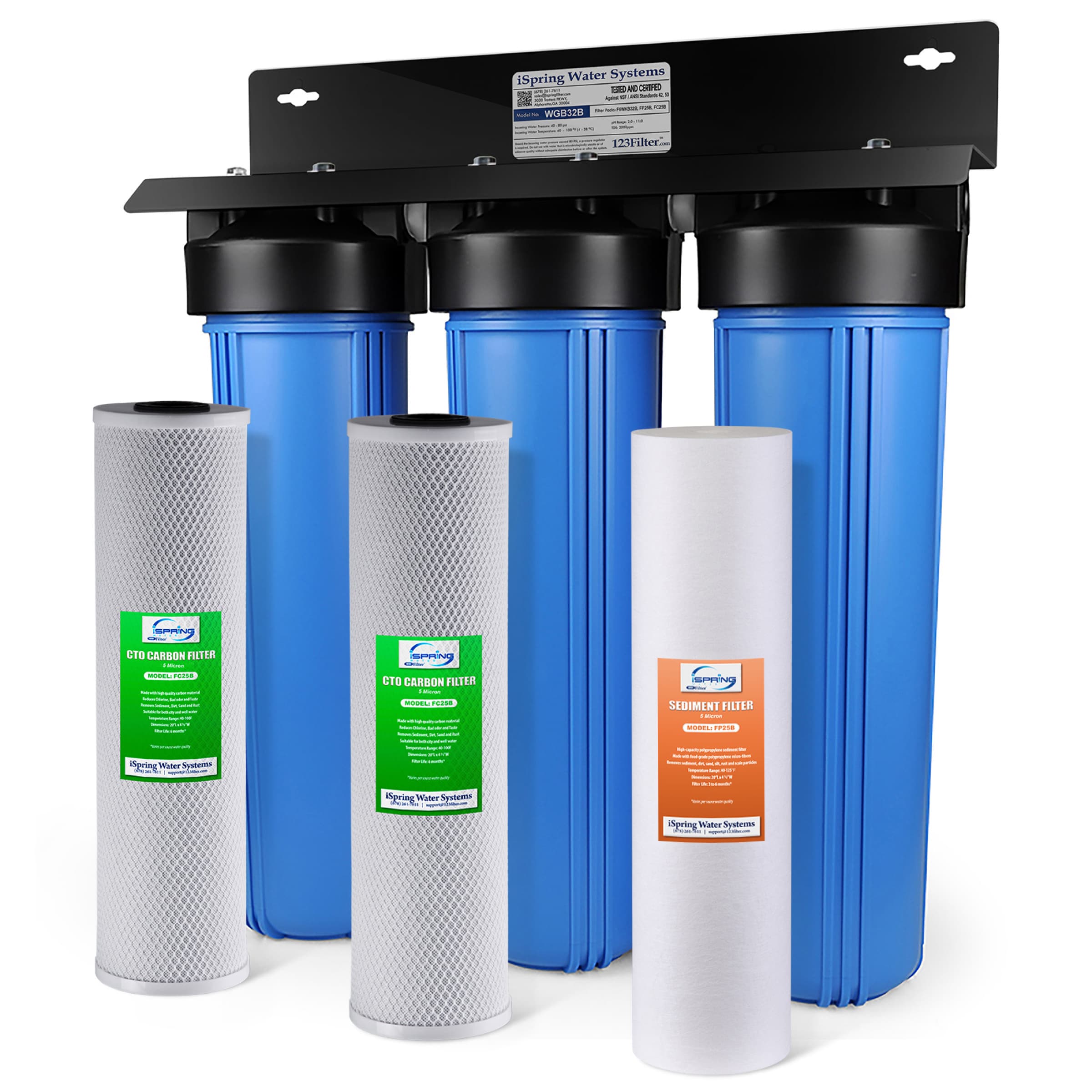


“Hard water” means high dissolved calcium and magnesium — usually reported as calcium carbonate (CaCO₃) equivalent in mg/L or grains per gallon (gpg). It is not a contaminant violation by itself: EPA does not set a health limit for hardness. It is annoying — scale on faucets, soap that will not lather, spotted dishes, dry skin, and shorter life for water heaters and appliances.
This list highlights ten large US metros where regional geology and typical public water system blends most often produce very hard tap water. It is not a milligram-for-milligram national public water system leaderboard: your exact ZIP, well field, and seasonal blend can differ from a neighbor. Always read your Consumer Confidence Report or run a home hardness strip if you need a number for sizing a softener.
Phoenix ranks among the hardest — see our Phoenix water quality report for the scored breakdown with PFAS, chromium-6, and the full safety grade.
Quick refresher: gpg vs mg/L
Most public water systems report hardness as CaCO₃. Rough guide: 1 gpg ≈ 17.1 mg/L. Water under ~60 mg/L (~3.5 gpg) feels soft; above ~120 mg/L (~7 gpg) most people call it hard; above ~180 mg/L (~10.5 gpg) is often labeled very hard in consumer literature. Your CCR may use either unit.
The top 10 cities
The Edwards Aquifer and Edwards Plateau limestone dissolve calcium and magnesium into source water. It is one of the metros most often cited for extreme kettle scale, spotted glassware, and water heaters that fail early from mineral buildup.
Free San Antonio water report (EPA data) →Colorado River supplies and local groundwater in the Basin and Range carry high mineral loads. Evaporation concentrates salts; blending sources still leaves many homes in the “very hard” band on consumer reports.
Free Las Vegas water report (EPA data) →Desert surface water and groundwater pick up carbonates and sulfates from long residence time in aquifers. Public water systems treat for safety, but hardness minerals are left largely in place — so scale on fixtures is the norm.
Free Phoenix water report (EPA data) →Southern Arizona aquifers flow through mineral-rich sediment and volcanic rock. Residents often see high total dissolved solids alongside hardness — RO drinking systems and whole-home softeners are common upgrades.
Free Tucson water report (EPA data) →Rio Grande rift and mountain-front recharge water interacts with limestone and gypsum-bearing formations. Hardness varies by well blend, but the regional baseline is well above the national median.
Free Albuquerque water report (EPA data) →High desert groundwater and river sources mineralized by geology and evaporation. Border cities here routinely publish hardness in the upper grains-per-gallon range compared with national averages.
Free El Paso water report (EPA data) →Red-bed sedimentary geology — sandstone, shale, and evaporite minerals — contributes dissolved hardness across the Great Plains. Agricultural and urban pumping can shift blends, but the regional pattern stays “hard to very hard.”
Free Oklahoma City water report (EPA data) →Central Texas limestone (Travis Peak / Edwards country) leaches calcium carbonate. Austin’s treated water is safe, but the same geology that builds caves builds scale in your coffee maker.
Free Austin water report (EPA data) →Pennsylvanian–Permian limestone and dolomite underlie much of the metro. Public water systems blend multiple wells and river intakes; hardness swings seasonally but typically stays in the hard band year-round.
Free Kansas City water report (EPA data) →North Texas Trinity and Woodbine aquifers plus surface blends often land north of 7 gpg at the tap. It is softer than San Antonio in many years, but still firmly in the “hard water” conversation for the state’s largest metro.
Free Dallas water report (EPA data) →Is hard water dangerous?
At typical municipal levels, hardness is not a short-term health emergency. Some studies even associate modest mineral content with dietary calcium intake — but you should not rely on tap water for nutrition. The real costs are plumbing, appliances, cleaning, and comfort. If you also have lead risk from older plumbing, remember: softeners do not remove lead; they change water chemistry. Use NSF-certified filtration for metals and PFAS at the tap.
What actually fixes it
Ion-exchange water softeners (salt-based) swap calcium and magnesium for sodium or potassium — that is the gold standard for whole-home scale control. Reverse osmosis strips hardness for drinking and cooking and also removes PFAS, nitrate, and many metals — but it does not protect your shower or water heater. Salt-free conditioners reduce scaling tendency without full ion exchange; results depend on water chemistry — size them with a real hardness test.
For deeper product comparisons, see our best water filters for hard water guide. For contaminant rankings (PFAS, lead, violations), start at the WaterCheckup rankings hub.
Check your own ZIP
City averages miss your block. Enter your ZIP on the WaterCheckup homepage for the exact EPA system serving your address — then decide whether you need softening, RO, or both.
Match a certified filter to your water source, concern, and home situation.
Live EPA data, PFAS results, and violation history for your ZIP — free.
Check My Water Free →