Best Water Filter for Hard Water 2026
Hard water affects 85% of US homes. Scale buildup destroys appliances, spots dishes, dries out skin, and wastes money on soap. Here are the only solutions that actually work — ranked by effectiveness and budget.
Phoenix has some of the hardest water in the US at 288 mg/L — see our Phoenix water quality report for the full scored breakdown and filter picks.
Los Angeles water is very hard at 268 mg/L with chromium-6 and PFAS concerns — see our Los Angeles water quality report for the full scored breakdown.
Updated May 2025 · NSF certifications verified · Some links are affiliate links
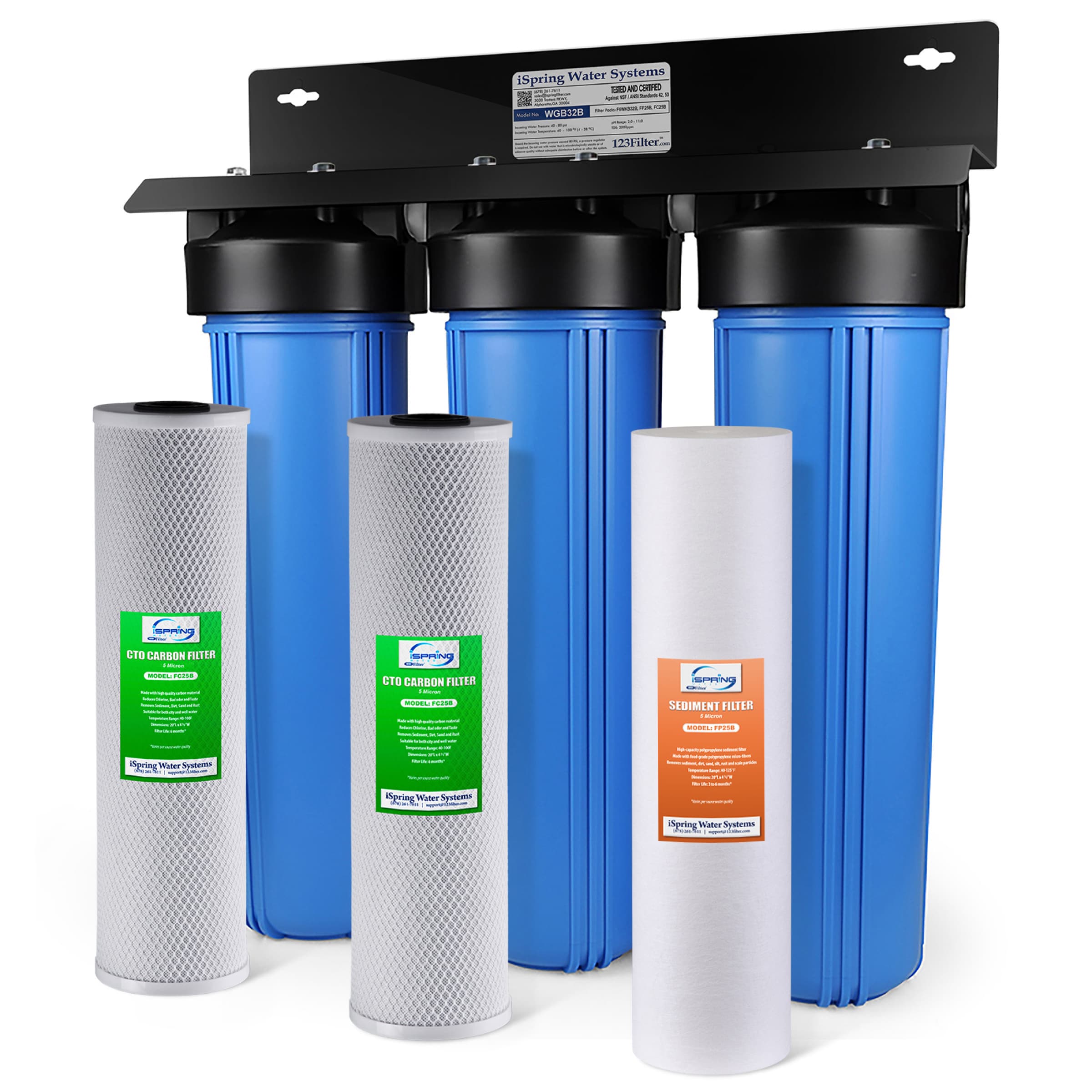
Hard water — softeners, whole-house carbon, RO, and shower filters




What is hard water?
Hard water contains high levels of dissolved calcium and magnesium — minerals picked up as water flows through limestone and chalk rock. It's measured in grains per gallon (gpg) or milligrams per liter (mg/L):
Don't know your hardness level? Check your ZIP code →
Signs you have hard water
Salt-free softeners — do they work?
Salt-free "softeners" (also called water conditioners) use template-assisted crystallization (TAC) to change the structure of hardness minerals so they don't stick to surfaces. They don't actually remove calcium and magnesium — they just change how the minerals behave.
Bottom line: Salt-free conditioners reduce scale buildup and are maintenance-free (no salt, no backwash). But they don't improve the feel of water for skin/hair and won't register as "soft" on a hardness test. For very hard water above 15 gpg, salt-based softeners are significantly more effective.
Very hard water cities: see our San Antonio water quality & contamination report (272 mg/L hardness, PFAS data).
FAQ
No. Standard Brita pitchers use activated carbon which improves taste and reduces chlorine but does not remove calcium or magnesium (hardness minerals). You need a reverse osmosis system or water softener for hard water.
Hard water is not a health hazard. In fact, the calcium and magnesium in hard water are essential minerals. The problems are practical: scale damage to appliances, pipes, and skin/hair. Some studies suggest hard water may slightly reduce cardiovascular risk.
The simplest test: add a few drops of liquid soap to a bottle of tap water, shake, and look for lather. Soft water produces abundant suds; hard water produces very little. For precise measurements, use a cheap TDS meter or water hardness test strips from Amazon.
Salt-based softeners run $800–$2,500 for the unit plus $200–$500 for installation. Salt costs $10–$25/month. A flagship tankless RO (e.g. Waterdrop G3P600) is typically around $439 plus filter replacements ($50–$150/year); basic RO systems are often $300–$600. The ROI is significant — softeners extend appliance and water heater life by years.
San Antonio (272 mg/L), Phoenix (288 mg/L), Las Vegas (290 mg/L), and Indianapolis are consistently ranked among the hardest. See our San Antonio water quality report for SA-specific data.
Free · Any US ZIP code · Instant results
Some links on this page are affiliate links — we may earn a commission at no cost to you. Our recommendations are based on NSF certifications and water quality data, not paid placements.