
Chloramine vs. Chlorine in Tap Water: What It Means for Filters
Many cities switched to chloramine for longer-lasting disinfection. That changes taste, byproduct chemistry, and which filters work best — here is the practical breakdown.
Whole-house carbon systems — every tap and shower

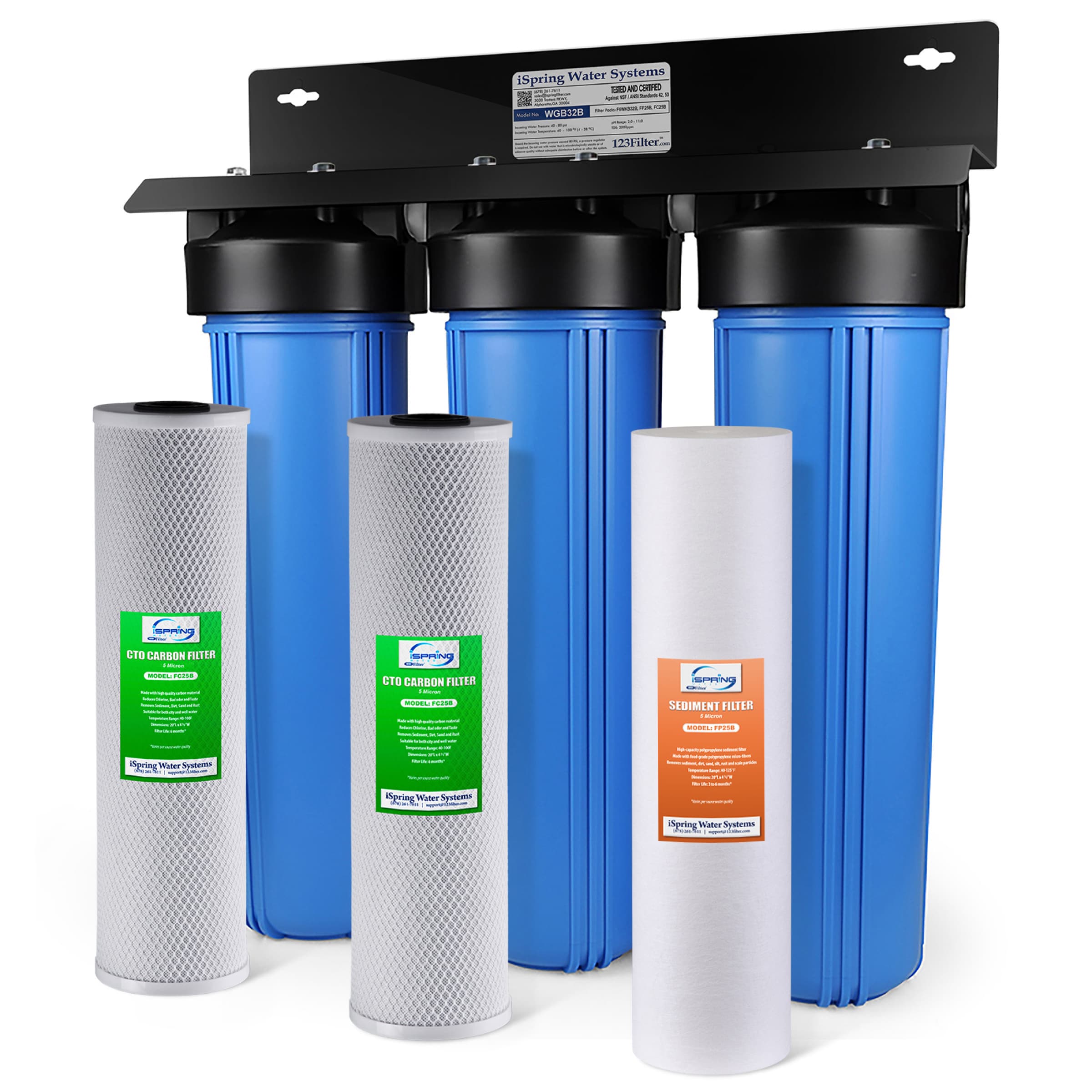


Most U.S. drinking water is disinfected with chlorine or chloramine (chlorine + ammonia). Both keep water safe from bacteria as it travels through pipes — but they behave differently in your home.
Chlorine (free chlorine)
Free chlorine is reactive and dissipates faster. It often produces a stronger “pool” smell right at the tap. Many basic carbon filters are tested for reducing chlorine taste and odor (often NSF/ANSI 42).
Chloramine
Chloramine persists longer in distribution systems, which is why large systems switched — it helps maintain disinfection all the way to distant customers. The tradeoff: it is less volatile than chlorine, so “letting water sit out” does less for smell, and some fish/aquarium and kidney dialysis applications need special handling (follow medical guidance).
Byproducts: TTHM and HAA5 still apply
Chloramine still forms disinfection byproducts (e.g., TTHM, HAA5) when it reacts with organic matter. Your CCR should show running averages compared to EPA limits.
What actually works at the kitchen sink
Carbon block (certified)
High-quality catalytic or specialty carbons can reduce chloramine for drinking water when certified for that claim. Capacity depends on contact time and cartridge size — undersink systems usually outperform small pitchers.
Reverse osmosis
RO is the most reliable way to reduce a wide range of contaminants for drinking and cooking, including chloramine and many related byproducts, assuming routine cartridge replacement.
How to know which you have
Read your CCR or call your public water system — they will state whether the residual disinfectant is chlorine, chloramine, or a combination. Match that to your filter's certifications.
Match a certified filter to your water source, concern, and home situation.
Live EPA data, PFAS results, and violation history for your ZIP — free.
Check My Water Free →